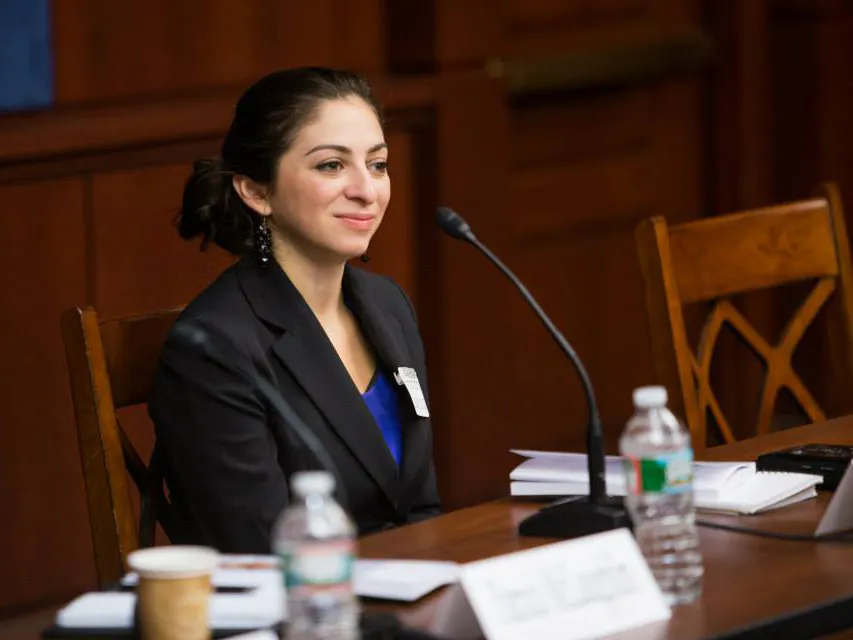
Liya Palagashvili’s early years were marked by having two hours of electricity a day and a grandfather who was imprisoned for running a side business. Today she is one of Washington's most-cited voices on the freedom to work.

In the Soviet Union, Liya Palagashvili's grandfather made and sold hats. For the crime of running a side business, he spent nine years in prison.
Self-employment was illegal. You were supposed to take the job the state gave you and ask for nothing more.
Liya was born near the end of that world and spent her early childhood in Armenia during its war with Azerbaijan, when electricity came on for about two hours a day. When it did, the family raced through the chores and gathered around the television.
Everything changed with a green-card lottery.
The family landed in Lancaster County, Pennsylvania, where a Mennonite community sponsored them. Neighbors bought their groceries, covered the first months of rent, and helped Liya’s parents find work.
That kind of open-handed generosity toward strangers, she would later realize, is itself a product of abundance. It rarely survives where everyone is scrambling to get by.
"You can be the smartest, most talented person in a different country. But if you don't have the opportunities, that talent doesn't get to thrive."
She found economics in high school, taught by someone who happened to hold a master's from George Mason University. It gave her a framework for the question that had shadowed her childhood. Why could people flourish in other places, and not where she came from? The answer, she came to see, was not talent. Her cousins who stayed behind were no less capable.
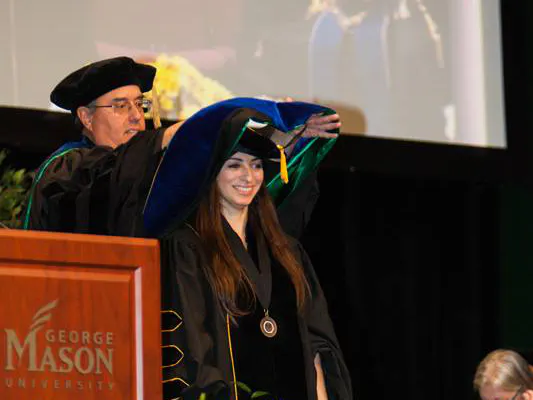
The answer is in institutions, and the opportunities they open or close. "You can be the smartest, most talented person in a different country," Liya said. "But if you don't have the opportunities, that talent doesn't get to thrive."
That question took her to George Mason University. As an undergraduate at Mason, she went to an IHS seminar, staying up until four in the morning arguing about classical liberal ideas.
She went on to intern at IHS, and after watching a scholar present her research at an IHS event, she decided she wanted to be a professor.
Her defining move came in 2019. The academic track she was on meant writing books on development economics, read mainly by other scholars. She wanted to spend her time differently, on work that could reach past the academy into the places where rules actually get written.
"The IHS sabbatical gave me the space to make the transition. It created this whole new space of where I am now."
An IHS Sabbatical Fellowship gave her the room to change course, and she used it to take up a question few economists were working on yet: how outdated rules squeeze the people who work in newer ways, from gig drivers to independent contractors. "The IHS sabbatical gave me the space to make the transition," Liya said. "It created this whole new space of where I am now."
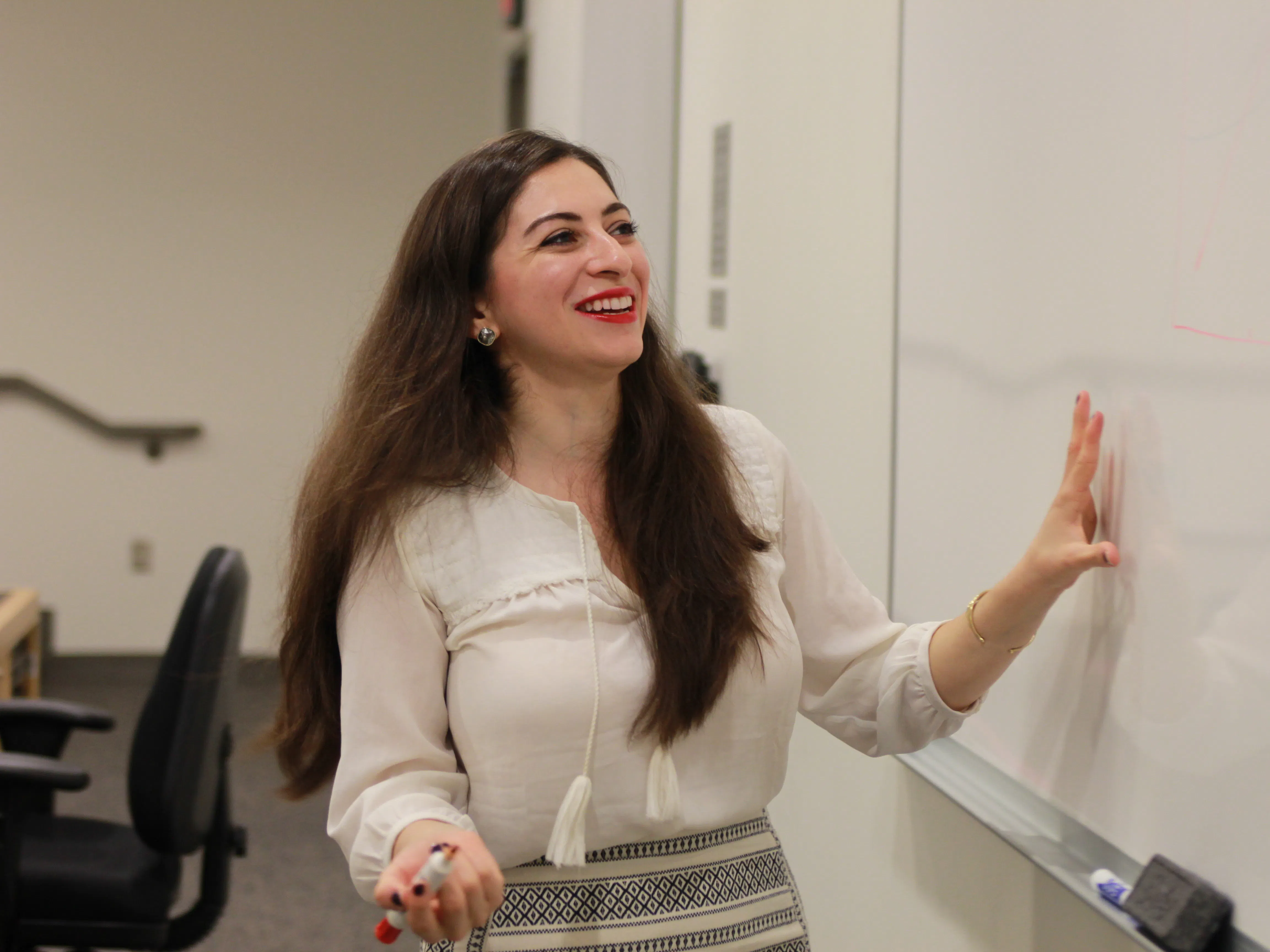
Her argument grows straight out of what she lived. When her parents arrived in the United States, what sustained them was the work they could pick up on the side, the independent shifts and odd jobs that eventually let her mother save enough to train as a hairdresser. That, to Liya, is what is really at stake.
America is the land of opportunity, and more than that, the land of diverse opportunities—the steady job and the side hustle alike—which is what gives people who start with nothing a place to begin. Cut off the lowest rung, she warns, and you do not lift people up. You strand them.
Her argument has reached the people who write the rules. Palagashvili and her Mercatus Center colleagues wrote a policy framework for portable benefits that some ten states have since adopted, and her research has been cited in federal legislation. She has testified before Congress five times. Forbes named her one of its 30 Under 30.
She has not forgotten where she started. Her grandfather was imprisoned for the freedom to make something and sell it, to work on his own terms. She now spends her days defending that freedom for others.