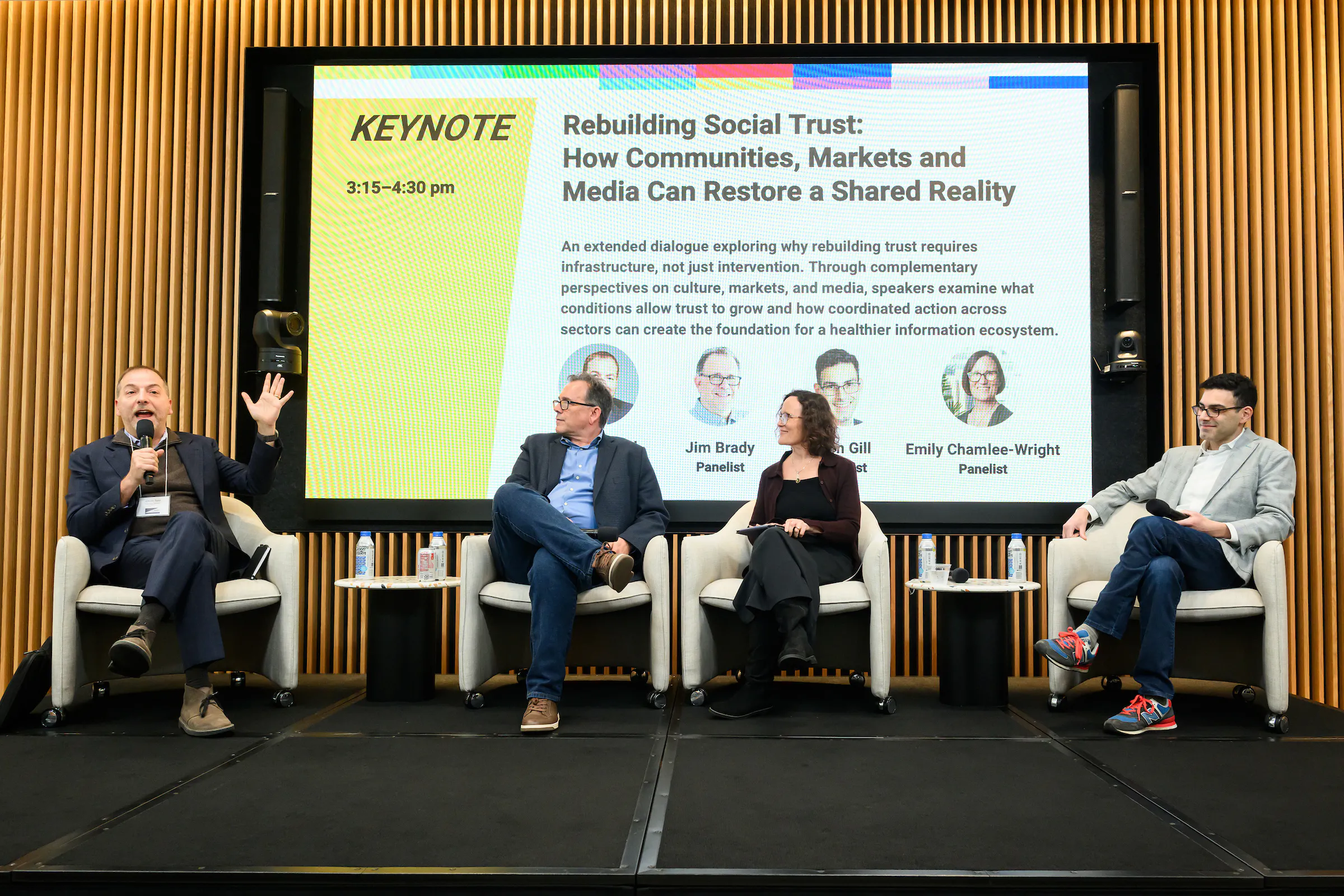
When Chuck Todd asked IHS President and CEO Emily Chamlee-Wright what she would say to an 18-year-old who has stopped believing that democracy works, she paused.
Todd had framed the question personally. A listener had written in about her son who was saying “I don’t think voting matters.”
Todd had heard versions of this before. A friend who had helped elect a president watched his own child lose faith in the process. "It's just made him so depressed," Todd said. "This is what he did for a living."
Emily's answer: "The most important thing we can do to foster trust in the system is that the system becomes worthy of trust."
That exchange captured the underlying concern of Beyond the Noise II, a convening co-hosted by IHS and the Trust in Media Cooperative on March 5 at USC's Capitol Campus in Washington, DC. The gathering brought together journalists, technologists, academics, funders, intelligence professionals, and policymakers who are all grappling with a version of the same problem: when people lose confidence in the information they receive, they lose confidence in the institutions built on it, and eventually, in the idea that their participation in those institutions means anything at all.
IHS approached the convening as an opportunity to introduce a clearer way of naming the problem and to connect people who might be working on it in isolation.
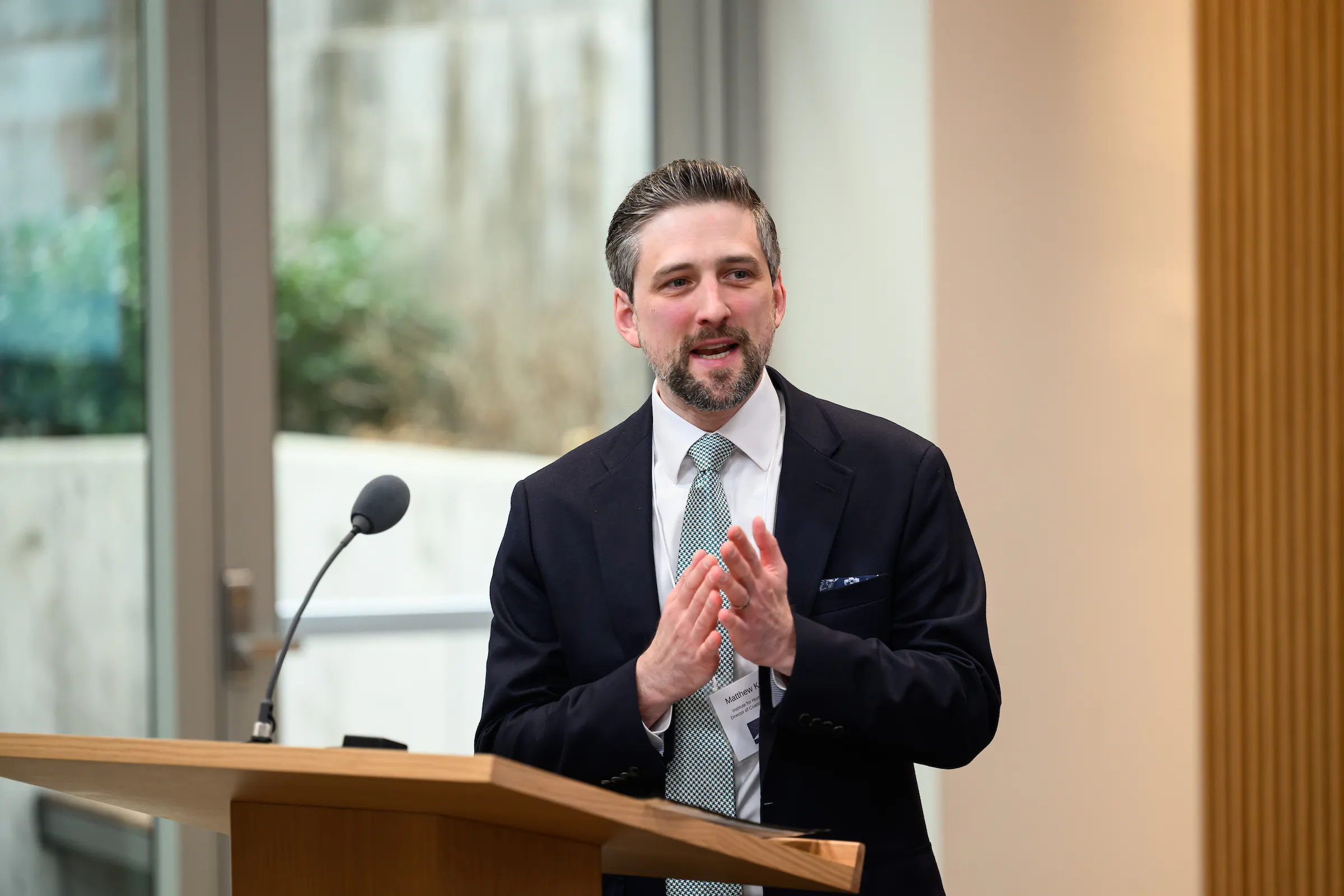
In his opening remarks, IHS’s Matthew Kuchem argued that the current moment cannot be understood as merely a misinformation crisis. It is a crisis of legitimacy. That shift moves the focus away from correcting individual claims and toward the institutional conditions that shape trust in the first place. It also requires letting go of familiar assumptions. The mid-twentieth century model, in which a small number of institutions mediated public discourse, is unlikely to return. Today's information environment is more decentralized, more participatory, and more contested. Trust has to be built within that reality.
Chamlee-Wright's keynote pointed toward what that kind of work demands. The most promising approaches, she noted, draw on a shared set of principles: open inquiry, contestation, and epistemic humility. These ought to be the design principles for institutions that want to re-earn the trust of people under conditions of disagreement and uncertainty.
Throughout the day, IHS scholars helped deepen and test these ideas across panels. Matthew Levendusky of Penn's Annenberg Public Policy Center examined how and why trust breaks down. Jennifer Lambe of the University of Delaware explored the incentives shaping the information supply chain. Renée DiResta of Georgetown focused on how influence operates within digital networks and what kinds of responses are likely to be effective.
In the weeks since the convening, IHS has remained in conversation with participants, with a particular focus on the intersection of artificial intelligence and the information ecosystem. The Trust in Media Cooperative is developing smaller, targeted gatherings to advance specific lines of work, and IHS is continuing to connect those efforts with scholars in its network.