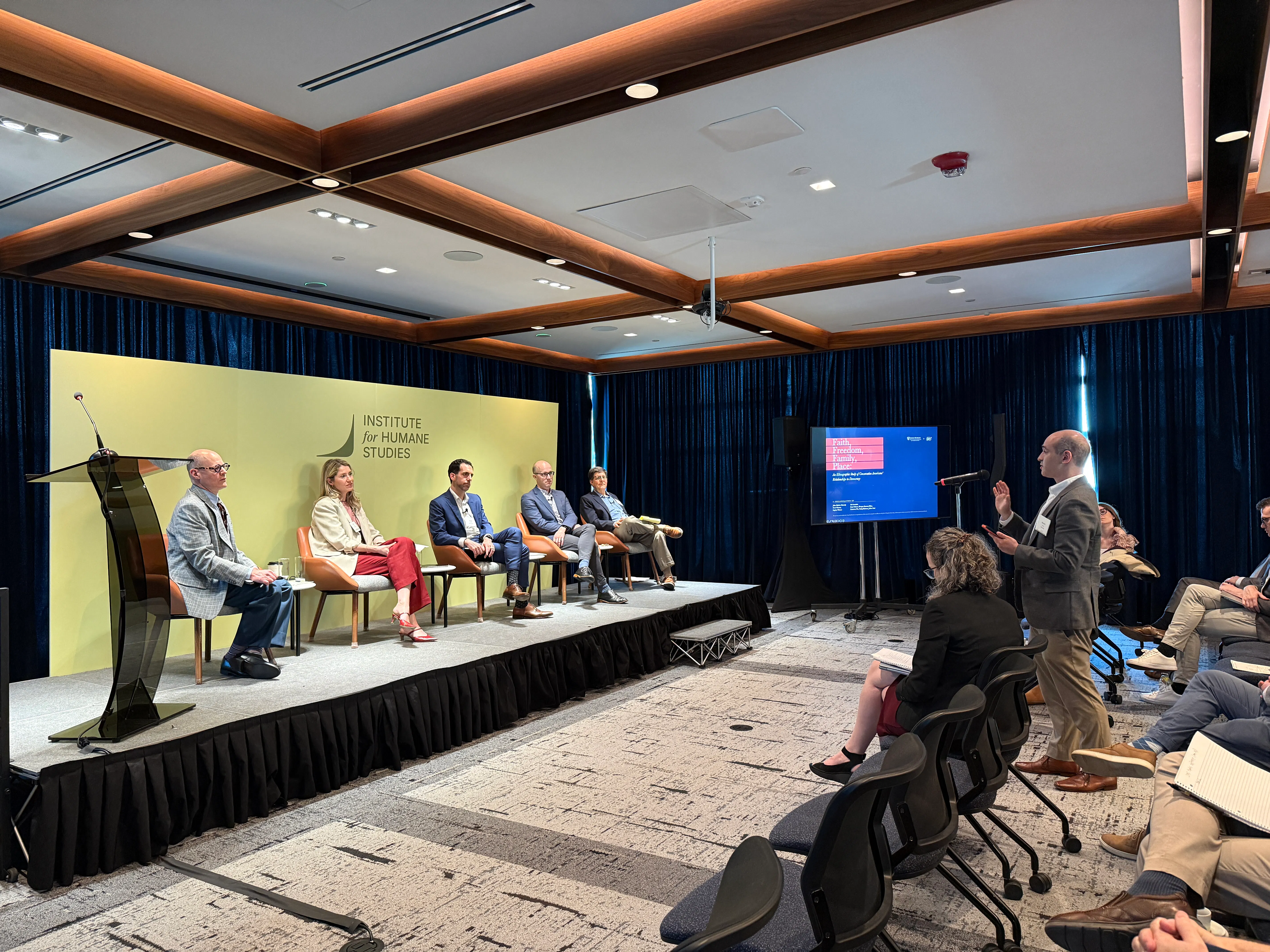
On May 20, IHS gathered researchers, practitioners, and funders around new ethnographic research on how conservative Americans understand democracy. The findings cut against some of the field's settled assumptions.
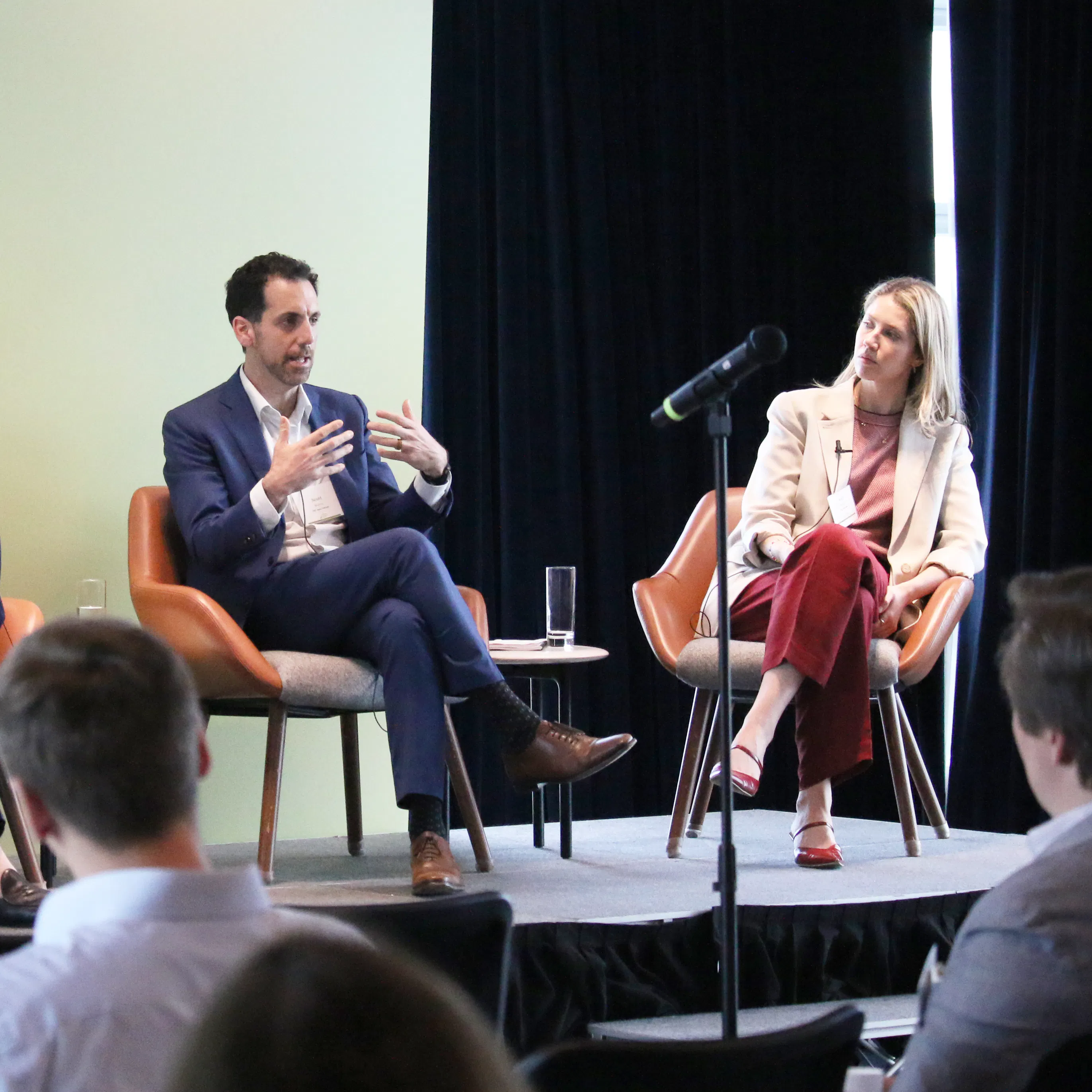
A year ago, the Institute for Humane Studies hosted a Summit on Trust and Democracy supported by the Hewlett Foundation. Hewlett had commissioned four research projects on trust in democratic institutions, and IHS convened scholars, practitioners, and funders to work through what those findings meant and what should come next.
One of the presentations came from Katy Osborn of ReD Associates, on how and why people undergo ideological change. IHS had deliberately paired Scott Warren of SNF Agora as a discussant on that panel, sensing that ReD's qualitative expertise and Scott's deep knowledge of conservative communities might be a productive combination. It was.
After the summit, Osborn and Warren began a new research project together, one that neither had been planning. IHS stayed close as it developed, connecting the team with scholars from its network who gave feedback on the methodology and the analysis.
The result was Faith, Freedom, Family, Place: An Ethnographic Study of Conservative Americans' Relationships to Democracy. On May 20, IHS brought the finished research back to the ecosystem. The symposium, “Democracy and Distrust: Insights from Conservative Communities,” gathered researchers, practitioners, and funders at the Bloomberg Center in Washington, DC, to work through the findings and their implications.
What the Researchers Found
Rather than send a survey, the research team went to live alongside the people they wanted to understand. They sat in living rooms, went to church gatherings, and listened to people talk about their families, their work, their faith, and their relationship to the government.
What emerged is that these Americans judge institutions against a moral foundation: faith, freedom, family, and a deep attachment to place. The constitution and the republic matter because they protect that foundation. Elections, courts, and procedures matter only insofar as they serve both. An institution seen as protecting the foundation earns trust; one seen as threatening it, however lawful, is treated as hostile. This is why many participants distrusted the word "democracy" itself while fiercely defending the republic.
Seen this way, the conservative Americans in this study were not rejecting democratic governance. They revered constitutional design, valued civic life, and held deep commitments to self-government. What they lost was faith in institutions and people they believed had broken with that foundation first. Their question is not "should America be a democracy?" It is "has American democracy remained faithful to what makes it legitimate?"
If this were a deficit—a failure to appreciate liberal democracy—the response would be education and persuasion. What the researchers describe instead is estrangement: a wounded relationship with institutions seen as having broken faith first. The report goes further still. For some of the people studied, tolerance for departures from democratic norms is, in the researchers' words, "a logical response often driven by an impulse to restore democracy." That formulation will be uncomfortable for many readers. It is also, the researchers argue, what the evidence shows.
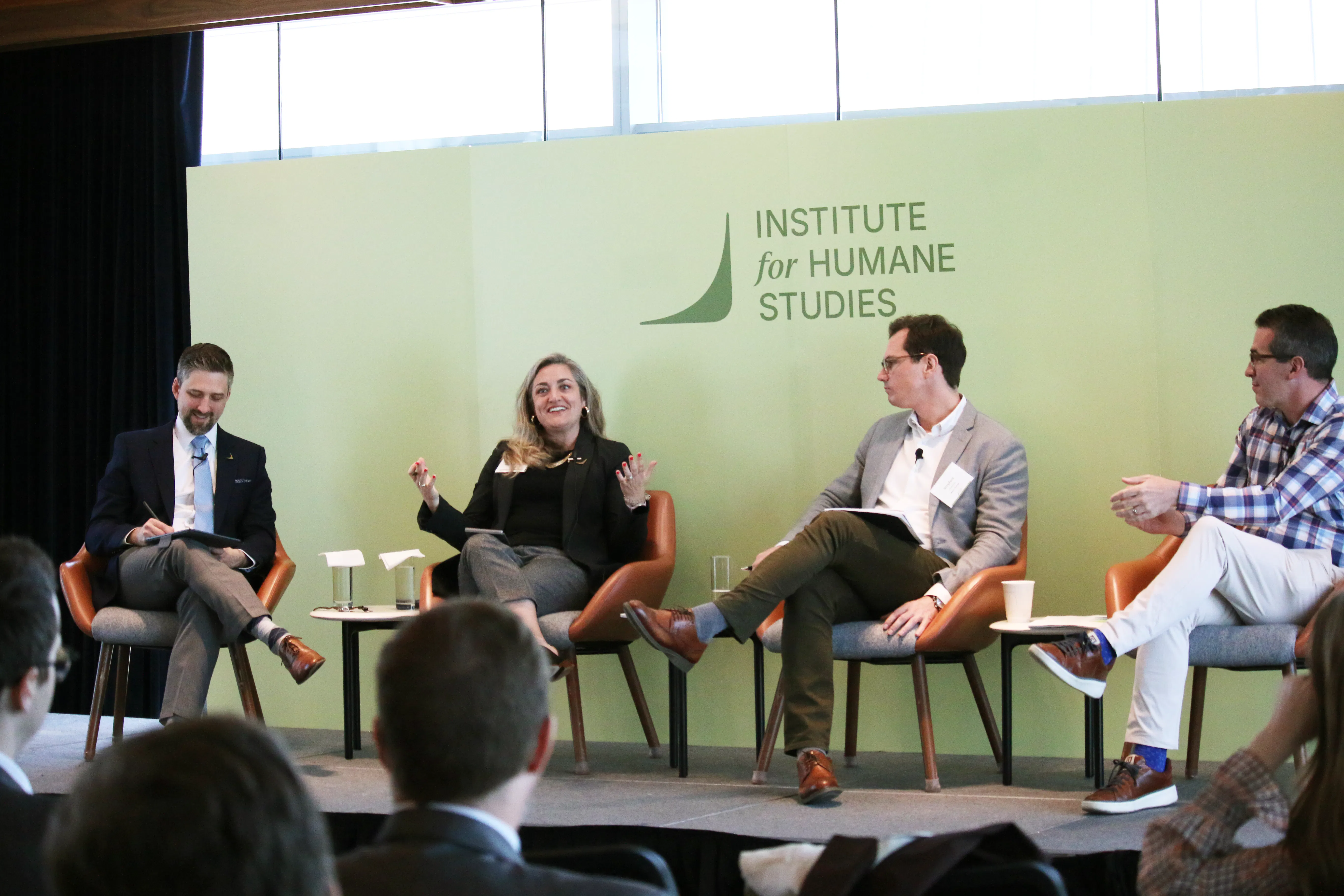
Lauren Hall, a political theorist at the Rochester Institute of Technology and a distinguished fellow at IHS, took part in the day's discussions. "This research models something we badly need more of: scholarship that takes its subjects seriously enough to let their first-person perspectives reshape the questions we're asking,” Hall said. “IHS's willingness to host this kind of convening, to bring scholars and practitioners into the same room around genuinely empirical work, is exactly the bridge-building infrastructure the field needs."
What the Field Needs to Do Differently
The afternoon discussions kept returning to a problem that goes deeper than tone or tactics. Much of the field has been defending democratic norms as if those norms were foundational, when the communities it most needs to reach experience them as conditional. What actually commands loyalty for these Americans is what sits below the procedural surface: the constitutional architecture, the constraints on power, and the sense that institutions remain accountable to something more than the will of whoever currently holds them. A field that wants to engage those communities has to start there, with the harder and more substantive questions about what makes democratic government legitimate in the first place.
Getting there requires the posture that Matt Kuchem, who directs the Liberal Democracy and Civics Initiative at IHS, asked for at the start of the day: "This is not a day for confirming what we already think. It is not a day for strategizing about how to bring conservative communities around to our point of view. It's a day for reckoning with what the research reveals."
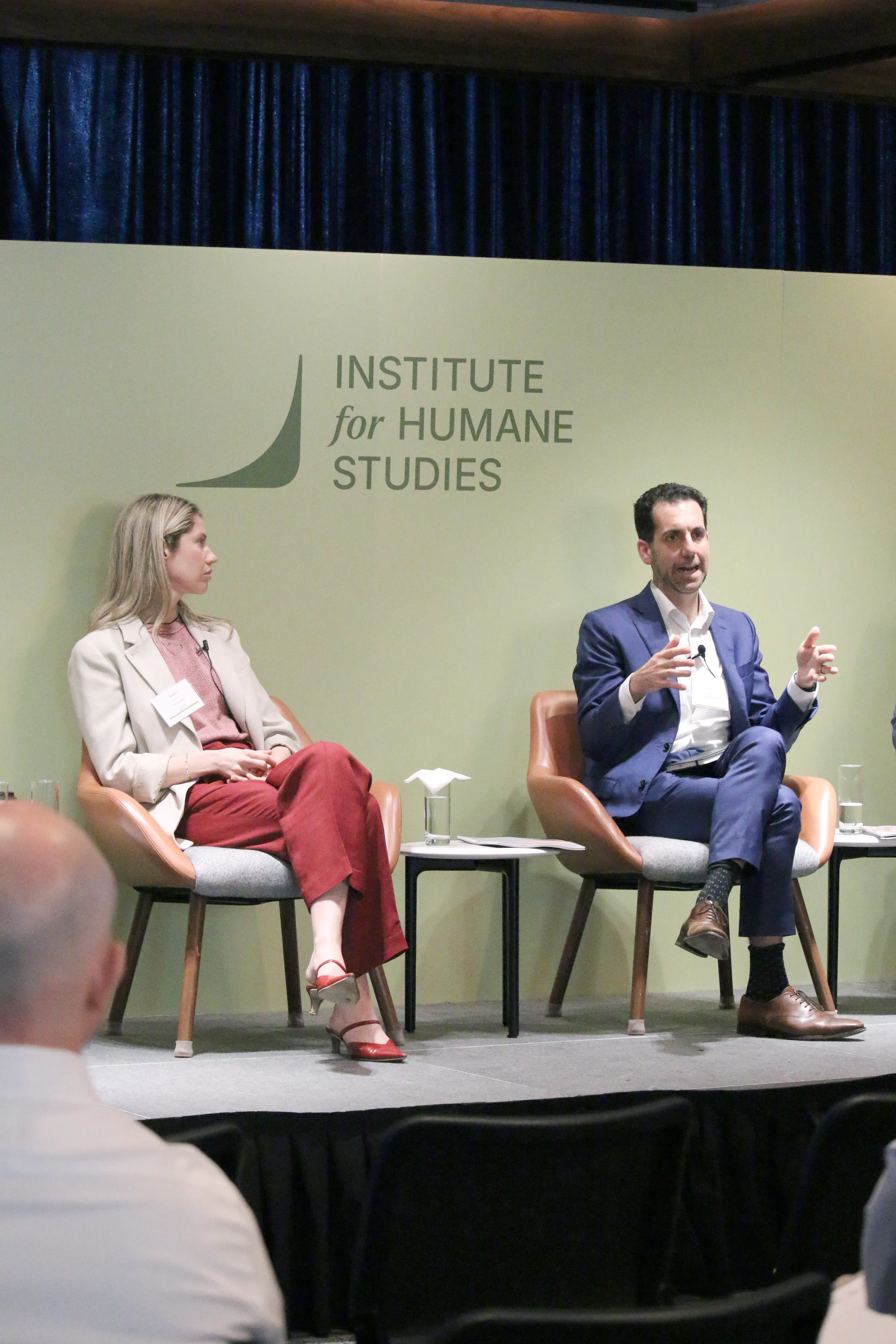
This is the work IHS exists to do. Research like this needed a venue where it could be framed, challenged, and carried to the people positioned to act on it, and IHS supplied that venue at every stage: the summit where the partnership formed, the roundtable where IHS scholars worked through the methodology with the team, and the symposium where the finished report met the field.
"It was such a gift to be able to collaborate with IHS and their network of scholars on this work," Katy Osborn said. "Each of the many scholars IHS brought us into contact with provided such incisive and constructive input. Their contributions, and IHS's, improved both the process and result tremendously."
Scott Warren added: "The substantive conversation from a diverse array of actors from across the democracy ecosystem both helped us strengthen the final draft of the report and provided ideas on how the report itself can be most useful. We want to ensure that this research is not just interesting but useful, and the event with IHS helped push in that direction."
Read the Report
The full report, Faith, Freedom, Family, Place: An Ethnographic Study of Conservative Americans' Relationships to Democracy, is available on the ReD Associates website and through the SNF Agora Institute.